 Myth Coloring
Creature notes · 旋龟
Xuan Gui
The Xuan Gui is an ancient Chinese mythical creature from the Shan Hai Jing, with the body of a turtle, a bird-like head, and a snake-like tail. This mysterious creature represents the strange and wonderful beings hidden within China's legendary mountains.
Quick Facts about Xuan Gui
The Xuan Gui is an ancient Chinese mythical creature from the Shan Hai Jing, with the body of a turtle, a bird-like head, and a snake-like tail. This mysterious creature represents the strange and wonderful beings hidden within China's legendary mountains.
- Chinese name
- 旋龟
- Cultural context
- This page distinguishes the traditional record described in its origin and mythology notes from MythColoring's visual interpretation.
What is Xuan Gui?
Origin and Mythology
The Xuan Gui (旋龟) is a mysterious creature recorded in the Shan Hai Jing (Classic of Mountains and Seas), one of China's oldest collections of mythical geography and legendary beings. According to the ancient text, the Xuan Gui lived in the waters near Mount Niuyang, a mountain region filled with unusual creatures and natural treasures. The Shan Hai Jing describes it as a creature resembling a turtle, but with the head of a bird and the tail of a snake. Like many beings in the ancient text, the Xuan Gui represents a world where animals, nature, and mysterious forces existed together beyond the boundaries of ordinary life.
In the ancient mountains described in the Shan Hai Jing, travelers believed that countless mysterious beings lived beyond familiar lands. Among these creatures was the Xuan Gui, a rare and unusual turtle-like spirit whose appearance challenged the natural order. Ancient people did not see creatures like the Xuan Gui simply as animals. They represented the unknown forces of nature and the hidden secrets of mountains, rivers, and oceans. The ancient text also records that the Xuan Gui was connected with protection and healing. It was believed that carrying it could help prevent hearing problems. Although the Shan Hai Jing gives only a brief description, the mystery surrounding the Xuan Gui allowed later generations to imagine it as an ancient guardian quietly living in forgotten waters, watching over a world humans could barely understand.
Appearance
The Xuan Gui combines three different creatures into one extraordinary form. Its turtle body represents stability, endurance, and ancient wisdom. Its bird-like head connects it with the sky and mystery, while its snake-like tail adds a sense of transformation and hidden power. Unlike ordinary animals, creatures from the Shan Hai Jing often exist between different worlds. The Xuan Gui is neither completely a land creature nor a water creature, making it a perfect symbol of the mysterious imagination found in ancient Chinese mythology.
Symbolism
The Xuan Gui represents mystery, balance, and the connection between different forms of life. By combining the turtle, bird, and snake, this creature reflects an ancient Chinese idea that the natural world was full of hidden relationships and transformations. The Xuan Gui reminds us that legends are not only about powerful monsters. Some creatures exist simply to inspire curiosity and wonder. Through MythColoring, we bring this ancient legend back into imagination, allowing everyone to create their own version of this mysterious creature.
Finished Artwork
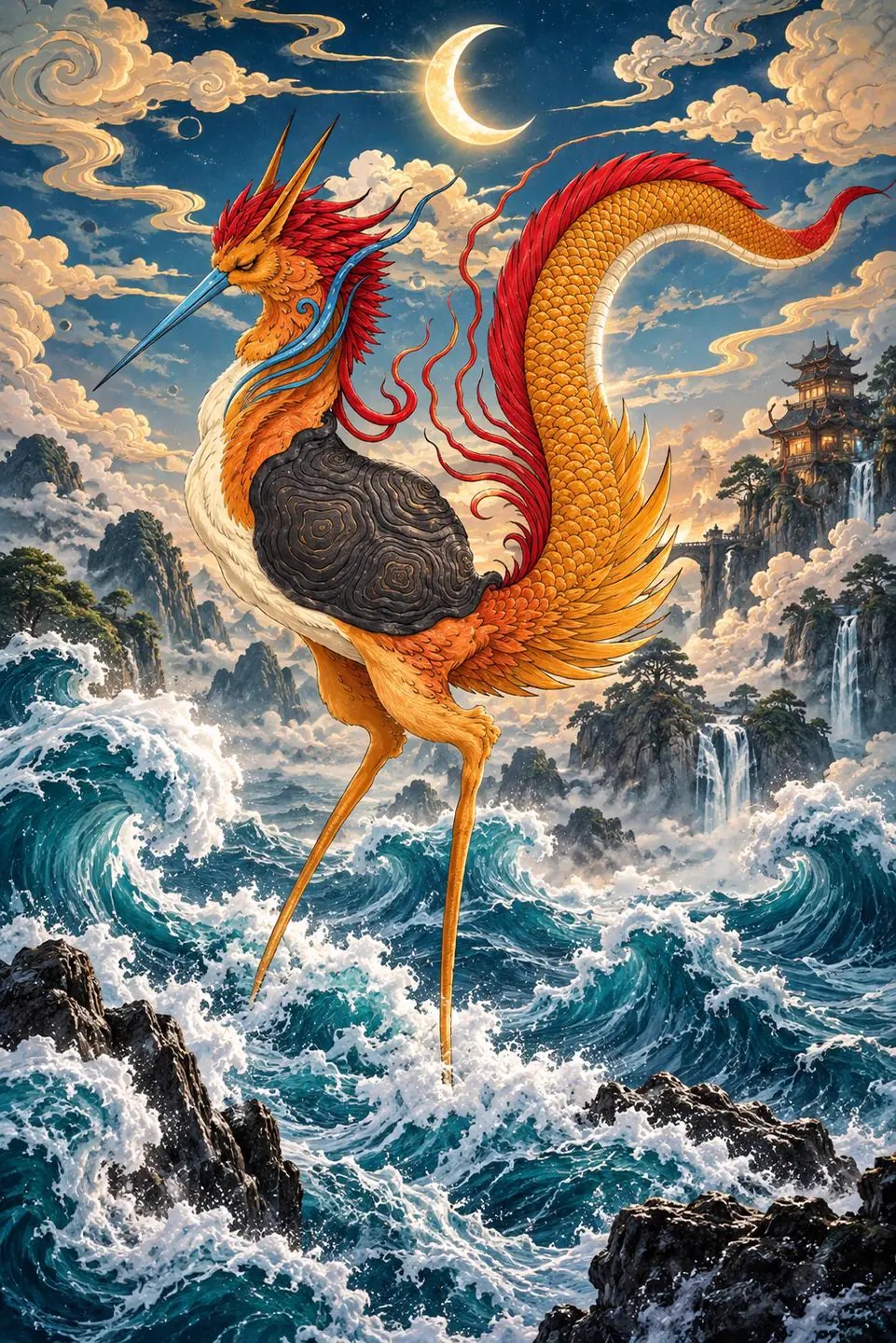
Xuan Gui Coloring Page
Print the clean black-and-white line art, or download the A4-friendly PDF for your coloring table.
Coloring Ideas
The color reference is only a starting point. Try a palette that feels right to you: soft pencils for a quiet, storybook look, bold markers for stronger contrast, or colors inspired by a favorite landscape. You do not need to match the finished artwork exactly—this Xuan Gui coloring page is yours to explore.
Color Preview
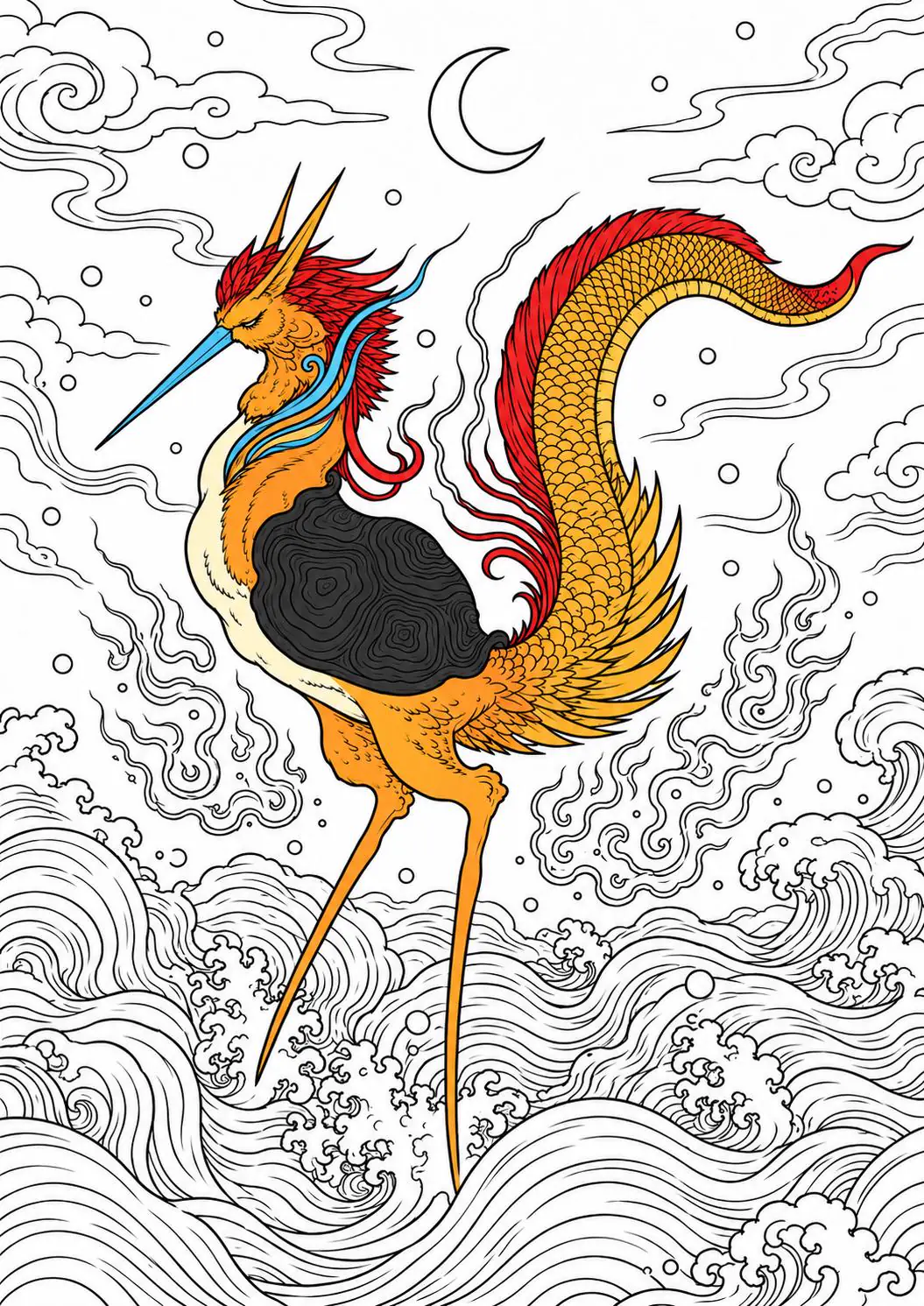
Printable Version
- Print the black-and-white PDF at A4 size or choose “Fit to page.”
- Use crayons, colored pencils, or markers on a paper weight that suits your tools.
- Keep the color guide on screen or beside you for inspiration while coloring.